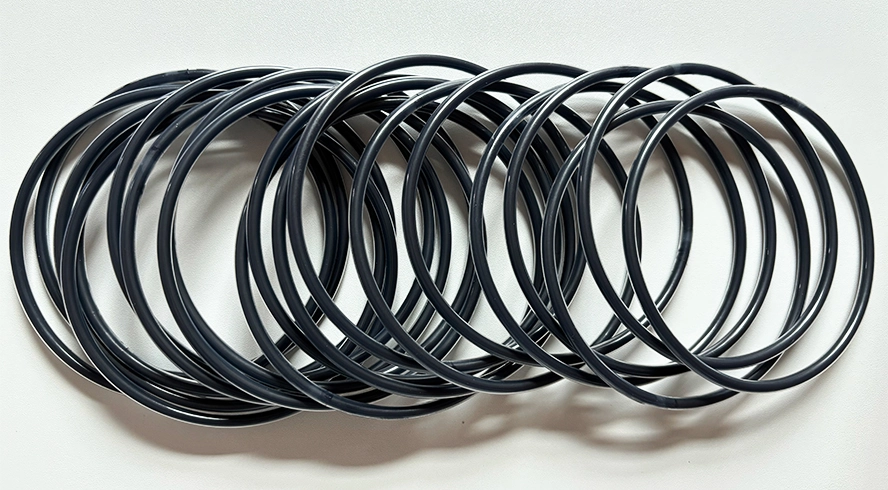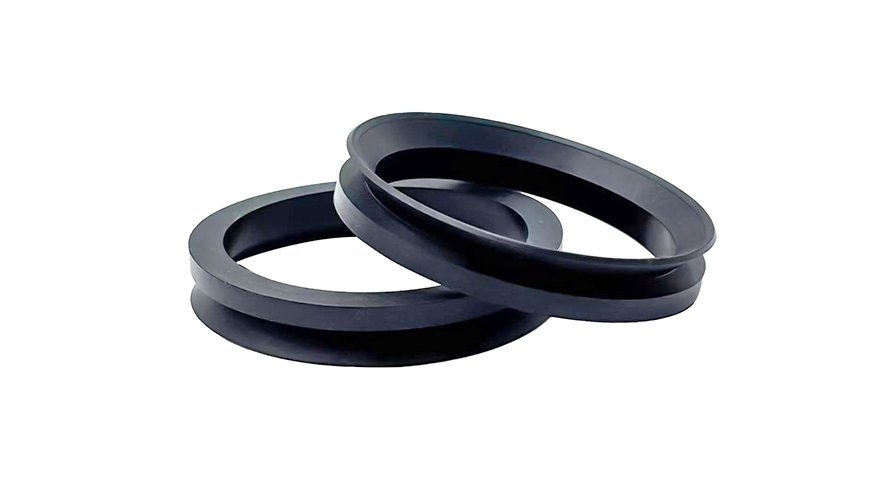




In my 24 years of field experience, I’ve rarely seen a hydraulic rod seal fail simply because it “reached the end of its life.” In high-pressure industrial systems—whether it’s a Danieli rolling mill or a subsea actuator—a leaking rod seal is a symptom of a systemic mismatch between the seal’s mechanical limits and the operating environment. When fluid begins to bypass the rod, it isn’t just a maintenance nuisance; it is an indicator of thermal distress, pressure spikes, or geometry shifts that will eventually destroy the cylinder’s gland and rod surface.
To solve the hydraulic rod seal leaking causes, we must move beyond the “replace and restart” mentality. We need to look at the polymer’s deformation, the metal’s surface topography, and the chemical interaction of the hydraulic medium.
1. The Physics of Failure: Seal Extrusion vs. Nibbling
Two of the most frequently misidentified rod seal failure modes are extrusion and nibbling. While they look similar to the untrained eye, their root causes require different engineering interventions.
Seal Extrusion
Extrusion occurs when the system pressure exceeds the material’s shear strength, forcing the seal into the clearance gap (the “e-gap”) between the rod and the gland nut. You will see a “feathered” edge on the low-pressure side of the seal. This is common when 90 Shore A NBR is used in applications exceeding 3,000 psi without an anti-extrusion back-up ring. If you find the seal has been literally “squeezed” out of shape, the gap is either too large due to wear or the material’s modulus is too low for the peak pressure.
Seal Nibbling
Nibbling is often the result of cyclic pressure pulsations. As the pressure cycles, the seal “breathes”—it expands into the extrusion gap and then retracts. This repetitive motion shears off small “bites” of the elastomer. In my experience with high-cycle construction equipment, nibbling is a leading indicator of excessive clearances or a lack of adequate lubrication on the rod surface, which increases friction and “pulls” the seal material into the gap.
2. Analyzing Material Degradation and Chemical Compatibility
When troubleshooting hydraulic cylinder seal troubleshooting, the choice of the primary sealing element and the energizer (if using a spring-energized design) is critical. For instance, using a standard NBR seal in a system running phosphate ester fluids will cause the seal to swell and eventually disintegrate.
At QZSEALS, we often see failures where a designer used a standard elastomer in an environment that demanded high-performance alloys or specialized polymers. For extreme environments, specifically in chemical processing or aerospace, the metallurgy of the spring energizer within a PTFE jacket determines the seal’s longevity.
| Material Grade | Key Characteristics | Max Operating Temp | Recommended Application |
|---|---|---|---|
| SS301 (1.4310) | Superior wear resistance & fatigue strength | 500°F (260°C) | Dynamic meander springs; high cycle counts |
| SS304 | Excellent machinability & high toughness | 450°F (232°C) | Standard industrial environments |
| SS316 | Molybdenum-enhanced for corrosion resistance | 400°F (204°C) | Chemical processing & marine (e.g., R35 designs) |
| Hastelloy C-276 | Outstanding resistance to aggressive chemicals | High Temp / Acidic | Acids, chlorides, and strong oxidizers |
| Inconel 718 | Superior radiation & oxidation resistance | 1,292°F (700°C) | Aerospace, vacuum furnaces, cryogenic |
| Elgiloy | Non-magnetic Co-Cr-Ni-Mo alloy | 1,472°F (800°C) | Extreme sour gas (H2S), cryogenic liquids |
3. The “Silent Killers”: Side Loading and Surface Finish
If you find that your rod seal is wearing unevenly on one side, you are likely dealing with side loading. This isn’t a seal problem; it’s a mechanical design problem. When the rod is subjected to lateral forces, it compresses the seal on one side, increasing the e-gap on the opposite side and inviting extrusion. In these cases, installing a high-modulus guide ring (wear ring) is mandatory to support the load and maintain concentricity.
Furthermore, we must discuss rod surface finish ($R_a$). I’ve seen engineers specify a “mirror finish” thinking it reduces friction. In reality, a surface that is too smooth (below 0.1 μm $R_a$) cannot maintain a microscopic oil film. The seal runs dry, generates frictional heat, and fails via compression set—where the elastomer loses its “memory” and flattens out. Conversely, a surface that is too rough (above 0.4 μm $R_a$) acts like a file, grinding the seal lip away. For most hydraulic applications, a finish of 0.2 to 0.3 μm $R_a$ is the “sweet spot” for seal longevity.
4. Case Study: Offshore Actuator Failure
Scenario: A subsea valve actuator using a standard FKM rod seal began leaking after only 200 cycles. The fluid was a water-glycol mixture, and the environment was highly corrosive.
Diagnosis: Upon inspection, the FKM seal showed significant chemical swelling and the stainless steel internal spring had suffered from chloride-induced stress corrosion cracking. The “leak” was actually a total loss of lip tension because the spring had snapped.
Solution: We redesigned the seal using a PTFE jacket (for universal chemical resistance) energized by an Elgiloy spring. As noted in our material specs, Elgiloy provides the necessary resistance to sour gas and chlorides that standard 300-series stainless cannot match. This assembly has now exceeded 5,000 cycles without measurable bypass.
5. Troubleshooting Checklist
- Check the Leakage Path: Does the rod only leak when moving (dynamic failure) or when sitting still (static failure)? Static leaks often point to compression set or a damaged gland.
- Inspect the Wiper Seal: Is the wiper (scraper) seal torn? If the wiper fails, contaminants enter the system, causing abrasive wear on the primary rod seal. Reference our Danieli-style double lip seals for high-contamination environments.
- Measure the Rod: Use a micrometer to check for rod taper or out-of-roundness. A rod that is even 0.05mm out of spec can cause chronic leakage.
- Evaluate the Fluid: Check for “cloudiness” or a burnt smell. Overheated oil (above 80°C) accelerates the hardening of NBR and FKM seals.
The QZSEALS Advantage in Rod Sealing
When standard off-the-shelf seals fail, the cost isn’t just the price of the part—it’s the $2,000-per-hour downtime of your production line. At QZSEALS, we specialize in high-performance replacements, including specialized CR-style oil seals and custom CNC-machined rod seals. Because we control the manufacturing process in our Dongguan facility, we can deliver custom-dimension seals in 7–10 days using materials ranging from standard NBR to high-spec Inconel-energized PTFE, ensuring your TCO (Total Cost of Ownership) stays as low as possible.