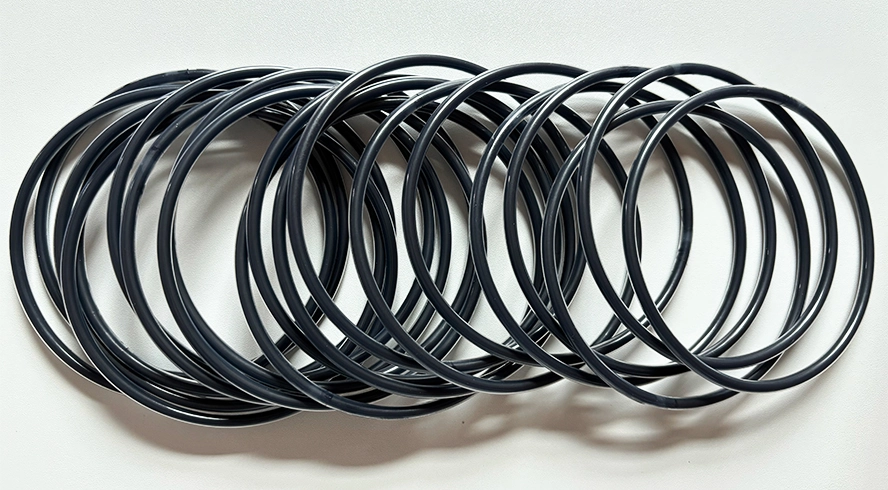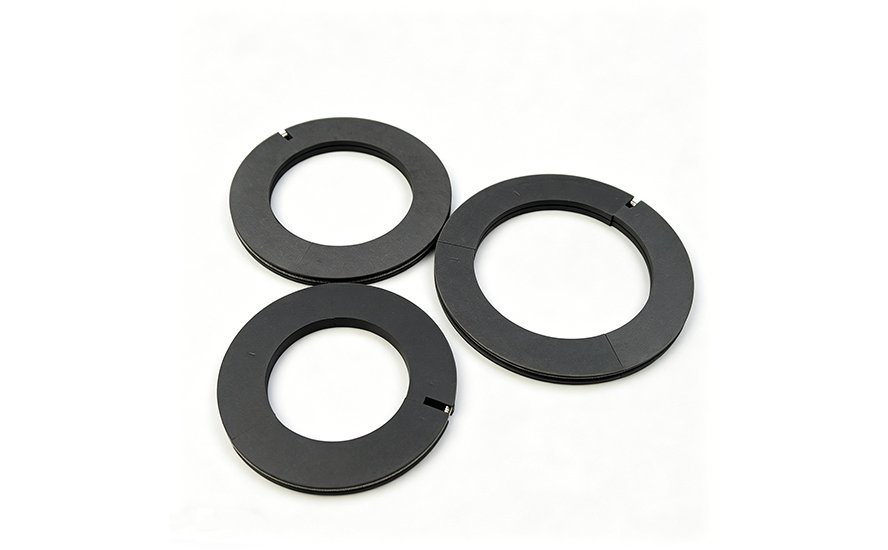



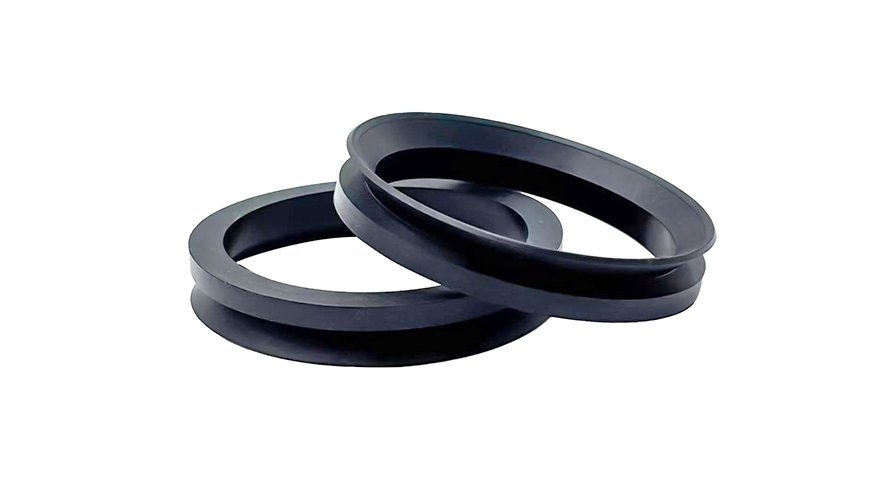
What Are V-Rings?
A V-ring is an all-rubber, axial shaft seal designed to protect bearings and shafts from contamination while retaining internal lubricants. Within the V-ring family, the VA rings and VAX rings are the two most critical profiles used in modern industrial engineering to ensure equipment longevity.
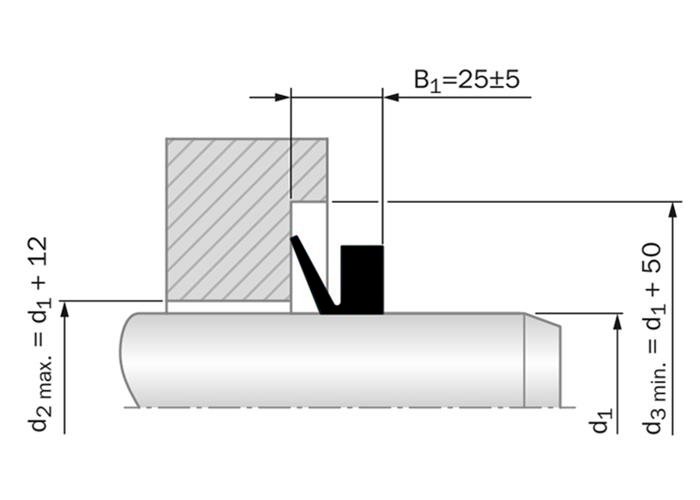
Unlike traditional radial oil seals that are pressed into a stationary housing, these rings are mounted directly onto the shaft and rotate with it. Named for their characteristic V-shaped cross-section, these seals utilize a flexible, conical sealing lip that presses against a counterface at a right angle. This unique axial contact allows VA rings and VAX rings to handle shaft misalignment and vibrations that would typically cause a standard radial seal to fail. If you are looking for high-performance rubber axial shaft seals, understanding the distinction between these two profiles is essential for optimal machine maintenance.
Where Are VA and VAX Rings Used?
While both profiles belong to the same functional family, their application environments differ based on the mechanical stress and rotational speed of the equipment.
1. VA rings: The Versatile Standard
The VA ring is the most common and versatile version of the axial seal. It features a beveled backrest and a slim installation profile, making it the “workhorse” for general engineering. Its primary applications include:
-
Electric Motors & Gearboxes: Providing essential protection for internal windings and gear sets.
-
Drive Gears & Power Transmissions: We offer specialized VA rings for power transmission systems to ensure smooth torque transfer by keeping out abrasive debris.
-
Bearing Protection: Many manufacturers rely on our VA rings for electric motor bearing protection to prevent grease contamination and premature failure.
-
Agricultural Machinery: Ideal for equipment exposed to soil, mud, and grit.
-
General Engineering: Used widely in pumps and automotive components.
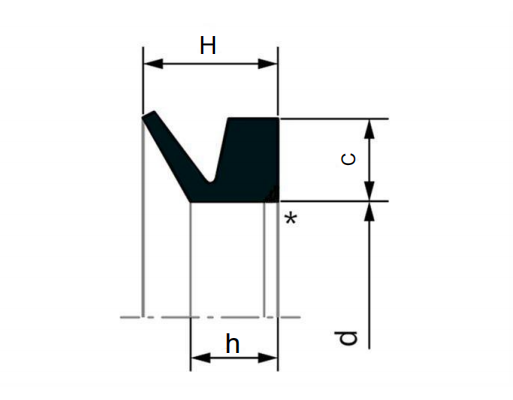
2. VAX rings: The Heavy-Duty Specialist
The VAX ring is a reinforced version of the standard VA profile. It is specifically engineered with a more massive cross-section and a thickened body to provide the rigidity needed for extreme conditions.
-
Wind Power: Specifically engineered as VAX rings for wind turbine main shafts, providing reliable protection against salt spray and moisture in offshore environments.
-
Heavy Industry: We supply high-durability VAX rings for rolling mills and paper machines, where seals must withstand constant exposure to scale, water, and cooling fluids.
-
High-Speed Drives: Optimized for VAX rings for high-speed machine tool spindles operating above 3,000 RPM, where centrifugal forces might cause standard rings to lose contact with the surface.
How Do They Work? The Principle of Operation
The success of VA rings and VAX rings lies in their dual-action sealing mechanism:
-
Axial Sealing Effect: The elastic sealing lip maintains constant contact with the stationary counterface. Because the lip is flexible, it can compensate for angular deviations and shaft run-out.
-
Centrifugal Slinging Action: Because the seal rotates with the shaft, it acts as a “slinger.” Centrifugal force deflects fluids, dust, and debris away from the sealing interface.
-
Secondary Protection: In many systems, these rings are used as a “pre-seal” to protect the primary radial oil seal, significantly extending the service life of the entire bearing arrangement.
Comparison: VA vs. VAX rings at a Glance
| Feature | VA-rings (Standard) | VAX-rings (Heavy-Duty) |
| Design | Beveled back, slim profile | Massive profile, thickened cross-section |
| Load Capacity | Standard performance | 40% higher radial load resistance |
| Speed Limit | Moderate speeds | High speed (>3,000 RPM) |
| Main Use | Motors, gearboxes, pumps | Wind turbines, rolling mills, spindles |
| Shaft Range | 3 mm to 2,000 mm | Typically 200 mm to 2,000 mm |
Material Excellence
At QZSEALS, we manufacture VA rings and VAX rings in a variety of high-performance elastomers to meet specific environmental demands:
-
NBR (Nitrile): The standard choice (-40°C to +100°C) for excellent oil and wear resistance.
-
FKM (Viton™ / Fluoroelastomer): Essential for high-heat (+200°C) and aggressive chemical zones.
-
VMQ (Silicone): Superior flexibility for extreme temperature fluctuations (-60°C to +200°C).
-
HNBR (Hydrogenated Nitrile): Enhanced temperature range (-40°C to +150°C) with superior oxidation resistance. Best for HNBR seals in high-temperature oil pressure equipment.
-
EPDM (Ethylene Propylene): Outstanding water, steam, and ozone resistance (-40°C to +150°C). We provide EPDM VA rings for water treatment equipment and humid environments.
Conclusion
When selecting axial seals, the precision of the mold and the quality of the rubber compound are critical. QZSEALS is a leading manufacturer with over 16 years of production experience in precision-molded sealing solutions.
We don’t just supply parts, we provide engineering confidence. Our team specializes in customized VA and VAX seals manufacturing tailored to your specific needs—from proprietary material compounding for extreme climates to custom sizing for non-standard industrial shafts. Whether you require standard VA profiles or heavy-duty VAX ring for wind energy applications, QZSEALS ensures your machinery stays protected with ISO 3601-3 compliant reliability.