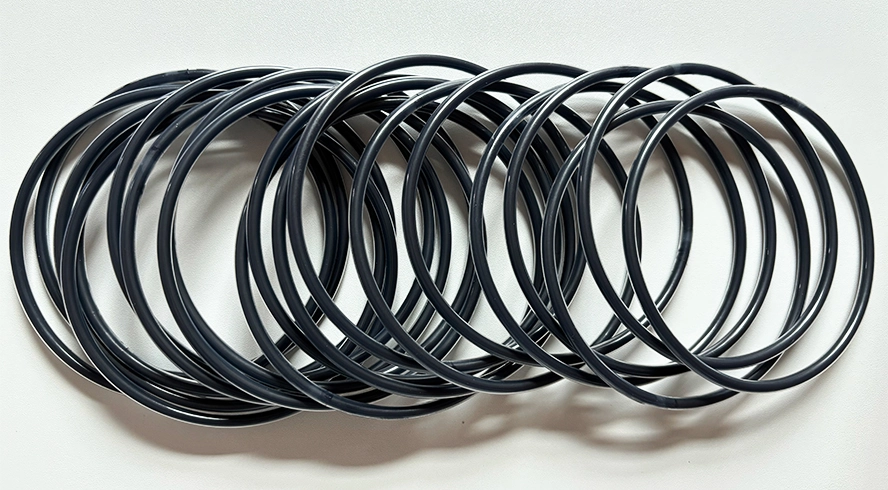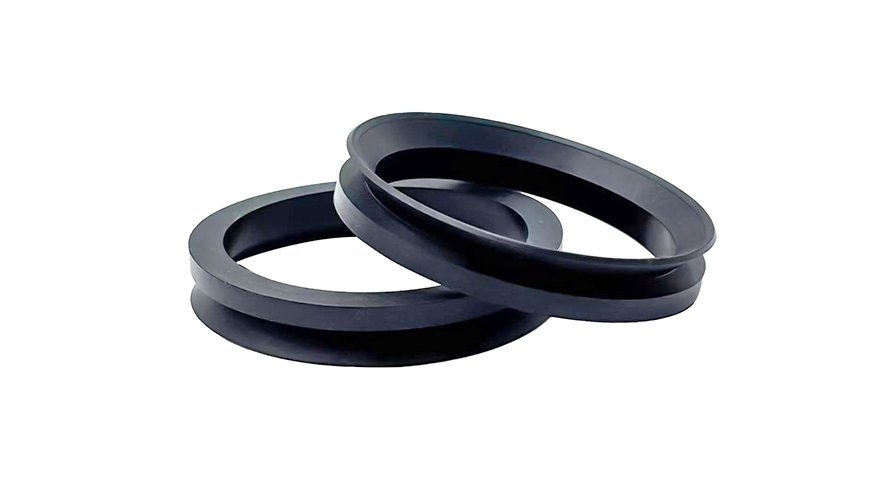



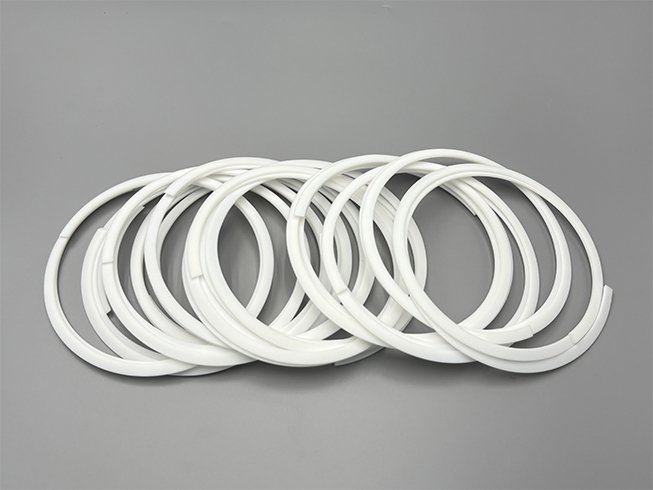
PTFE spiral backup rings and other precision components are essential for maintaining sealing integrity in high-pressure hydraulic and pneumatic systems. One small failure can lead to leakage, equipment damage, or even total system shutdown. This is where PTFE spiral backup rings become critical assets for ensuring high-pressure hydraulic sealing integrity solutions.
Designed to support primary seals such as O-rings, these components are the primary PTFE backup rings for extrusion prevention, stopping seals from deforming under intense pressure. Among the most commonly used types are industrial grade PTFE seals for machinery, particularly in spiral and split (scarf cut) designs. Although both serve the same fundamental purpose, a PTFE spiral vs. split backup rings comparison reveals that their structural differences significantly affect performance, installation, and maintenance. Understanding these technical nuances will help you select the most suitable custom PTFE backup ring manufacturing options for your specific application.
The Role of Backup Rings in Sealing Systems
Backup rings act as a secondary support element placed next to the primary seal. When systems operate under high pressure, elastomeric seals may be forced into clearance gaps, leading to extrusion and premature failure. By utilizing PTFE backup rings, engineers can effectively achieve extending O-ring service life in high-pressure systems.
By providing a rigid barrier, backup rings:
- Maintain seal shape under pressure
- Prevent extrusion into gaps
- Improve sealing reliability
- Extend service life of sealing components
This function is especially important in dynamic systems where pressure fluctuations and movement are constant, making the benefits of spiral PTFE rings for dynamic sealing a top consideration for design engineers.
PTFE Spiral Backup Rings: Performance-Oriented Design
PTFE Spiral Backup Rings are manufactured as a continuous coil of PTFE, forming a gapless structure. This design is specifically engineered for the most demanding industrial environments.
Key Characteristics
Continuous Support Without Gaps
The absence of a cut eliminates weak points, ensuring consistent support around the entire circumference of the seal.
High Pressure Capability
Spiral rings are well suited for systems exposed to pressure spikes or extreme operating conditions.
Adaptability in Dynamic Applications
The helical structure allows slight flexibility, helping the ring adapt to movement and pressure changes.
Resistance to Harsh Environments
As chemical resistant backup rings for oil and gas, PTFE material provides excellent chemical inertia and operates reliably across a wide temperature range.
Considerations
The main trade-off is installation complexity. Because the ring is a continuous spiral, it cannot be simply snapped into place. Instead, it must be carefully wound into the groove, often requiring more time and specialized experience.
PTFE Split Backup Rings: Convenience and Efficiency
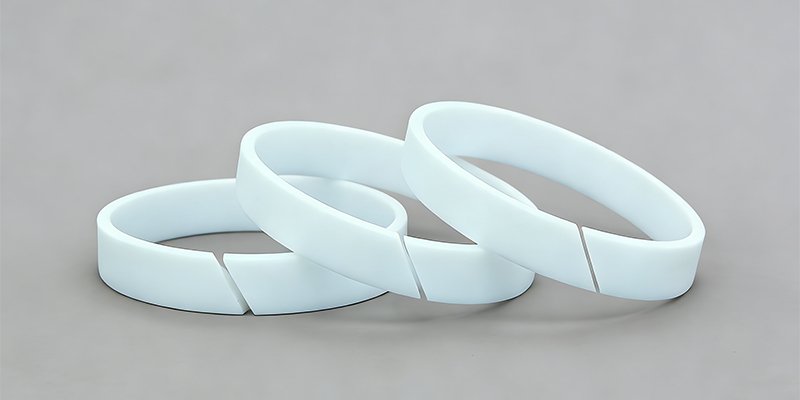
PTFE Split Backup Rings feature a precision cut (scarf cut) along the circumference, allowing them to expand slightly during the assembly process.
Key Characteristics
Simple Installation
The ring can be easily installed by snapping it into place, without the need for full system disassembly.
Efficient Maintenance
Removal and replacement are quick, making them ideal for systems that require frequent servicing.
Versatile Application Range
They perform well in a wide variety of hydraulic and pneumatic systems operating under moderate conditions.
Considerations
The cut in the ring creates a small gap, which can become a potential extrusion path under very high pressure. For this reason, they are generally not the first choice for extreme applications.
Installation: Practical Differences That Matter
The difference in design directly impacts installation procedures.
PTFE spiral backup rings require careful handling. The installer must guide the ring into the groove while controlling deformation to avoid damage. In many cases, partial disassembly of the equipment is necessary to access the installation area.
PTFE split backup rings, on the other hand, are designed for efficiency. Their open structure allows them to be installed quickly with minimal tools and without dismantling surrounding components.
In real-world operations, this difference translates into longer assembly time for spiral rings but significantly easier handling for split rings.
Maintenance and System Downtime
Maintenance strategy is often the deciding factor when determining how to choose backup rings for high-pressure hydraulics.
-
PTFE split backup rings offer clear advantages in serviceability. They can be replaced quickly, reducing downtime and labor costs, which is vital for accessible machinery.
-
PTFE spiral backup rings are typically chosen for systems where long-term reliability is more important than ease of maintenance. Their design minimizes extrusion risk, which can extend service intervals significantly.
Performance Comparison in Real Applications
From a performance perspective, the most important difference lies in how each design handles pressure.
Spiral backup rings provide continuous support, making them highly effective in preventing extrusion. This makes them ideal for high-pressure hydraulic systems and critical sealing applications.
Split backup rings, while reliable in general conditions, introduce a minor discontinuity due to the cut. Under moderate pressure, this is rarely an issue. However, under extreme conditions, it can become a limiting factor.
In practice, this means spiral rings are preferred in demanding environments, while split rings serve as a flexible and efficient solution for general use.
How to Choose the Right Backup Ring
Selecting the right design depends on your specific system requirements and environmental factors.
Choose PTFE Spiral Backup Rings when:
-
Operating pressure is extremely high or fluctuates rapidly.
-
Sealing failure would have catastrophic or expensive consequences.
-
Long-term service life is a priority over ease of installation.
-
The application involves chemical resistant backup rings for oil and gas exploration.
Choose PTFE Split Backup Rings when:
-
Fast installation and ease of assembly are required.
-
Equipment is frequently serviced or inspected.
-
Operating conditions are moderate and stable.
-
Reducing downtime is a primary business objective.
The Advantage of PTFE Material
Both designs benefit from the inherent properties of PTFE, which make it one of the most reliable sealing materials available.
It offers low friction, strong chemical resistance, and stable performance across extreme temperatures. These characteristics allow backup rings to perform consistently in demanding industrial environments.
For applications involving aggressive media or temperature variation, high pressure PTFE seals remain a dependable choice.
Conclusion
Both spiral and split designs are essential high-performance sealing solutions, but they are designed for different priorities. Spiral rings deliver maximum sealing integrity for high-pressure, high-risk environments, while split rings provide ease of use and maintenance efficiency for general-purpose applications.
By understanding how design affects performance, you can ensure long-term reliability for your machinery.
About QZSEALS
QZSEALS focuses on delivering reliable and practical high-performance sealing solutions for industrial applications worldwide. We specialize in custom PTFE backup ring manufacturing, including spiral PTFE back-up rings, split PTFE back-up rings, solid backup rings, O-rings, and customized sealing elements.
With a strong emphasis on consistency and application-driven design, we support customers in industries such as oil and gas, heavy machinery, and fluid power systems. Our goal is simple: to provide industrial grade PTFE seals for machinery that perform reliably under real working conditions while helping customers reduce maintenance costs and improve system efficiency.